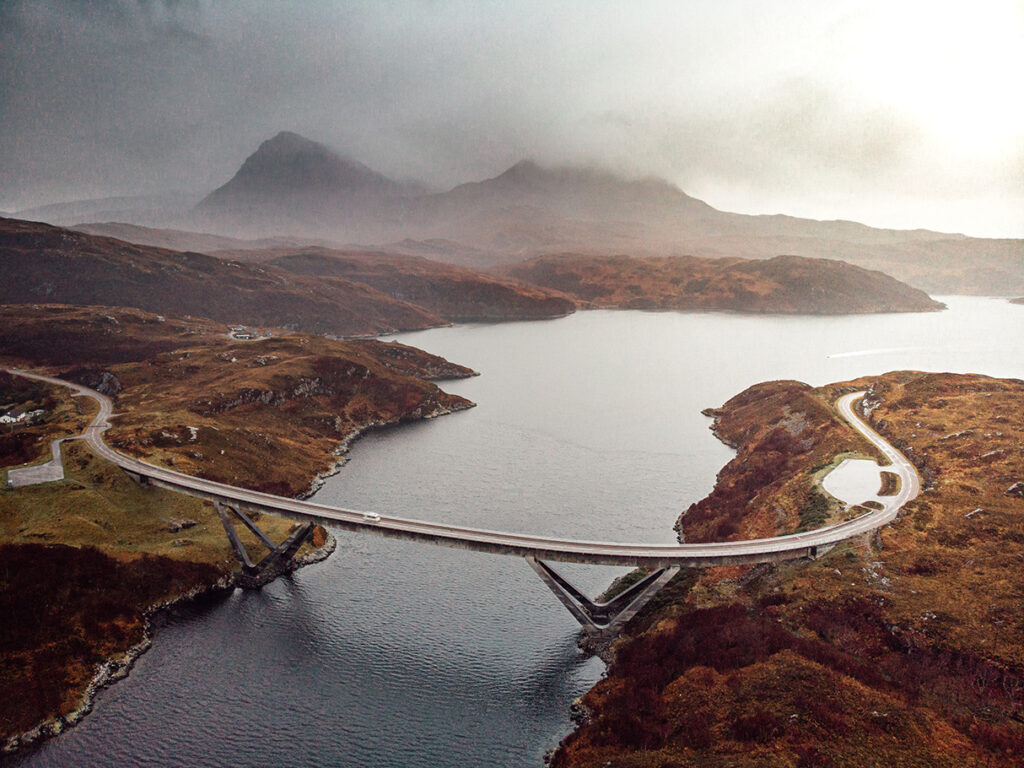
The North Coast 500 loops around the northern Highlands, starting and ending in Inverness. The route follows the A9 north, then traces the coast along single-track roads through Caithness, Sutherland, and Wester Ross before returning south through Achnasheen.
It takes about ten hours of driving without stops. Most people take five to seven days.
The Route and Road Conditions
From Inverness, the route heads north on the A9 to Wick, west along the north coast to Durness, then south down the west coast through Lochinver, Ullapool, and Torridon. The final stretch crosses east through Glen Carron back to Inverness.
The northern section uses mostly A-roads. The west coast is where the single-track roads begin. These are paved but narrow, with passing places every hundred yards or so. You pull in when you see oncoming traffic. It slows you down, but it’s not difficult once you get the rhythm.
In summer, expect traffic. The route became popular around 2015, and July and August now see camper vans nose-to-tail on some stretches. May, June, and September are quieter. Winter brings short days and closed facilities, but you might have the roads to yourself.
Where to Stop
Dunnet Head, not John o’ Groats, is the actual northernmost point of mainland Britain. It’s a short detour from the A836 and far less crowded. The cliffs look out to Orkney on clear days.
Smoo Cave near Durness is a sea cave you can walk into without a torch. There’s a waterfall inside if there’s been rain. Free, open all the time.
The stretch from Lochinver to Ullapool takes you past Assynt, where the mountains stand alone rather than in ranges. Suilven and Stac Pollaidh are the peaks you’ll see from the road. Both are popular climbs if you have hillwalking gear and a day to spare.
Applecross is reached by the Bealach na Bà, a mountain pass with hairpin bends and a 626-meter summit. The Applecross Inn serves seafood at the bottom. The langoustines come from the bay in front of the pub. Expect to pay around $35 for a main course. It’s open year-round but check ahead in winter.
Torridon offers serious hill country. Beinn Alligin and Liathach are long days out. The Torridon Hotel has a bar that’s open to non-guests, with over 350 whiskies.
Practical Considerations
Fuel stations are sparse on the west coast. Fill up in Ullapool, Lochinver, or Durness. Some stations close on Sundays.
Accommodation books up months ahead in summer, especially in small villages like Applecross and Lochinver. Ullapool and Gairloch have more options. Wild camping is legal in Scotland under the Scottish Outdoor Access Code, but you need to be responsible about it: no fires, take all rubbish with you, and stay away from buildings and farmland.
Midges are worst from late May through September, particularly on calm, overcast days near water. Bring repellent. They don’t bite through clothing.
Mobile phone signal is patchy. Download offline maps before you leave Inverness.
Clockwise or Counterclockwise
Most people drive clockwise, which puts you on the inside lane for coastal views on the west side. Counterclockwise puts you closer to the edge on narrow sections, which some drivers find unnerving, but you also have better access to pull-offs for photos.
There’s no wrong direction. Clockwise is more common, which means counterclockwise may mean slightly less traffic.
The route passes through working communities, not a scenic theme park. Drive courteously, use passing places properly, and don’t block single-track roads for photos. The locals live here year-round.
If you’re planning a trip through the Highlands or anywhere else in Scotland, subscribe to The Ultimate Scotland Travel Guide newsletter. One short story a day, straight to your inbox.
Tours & experiences in Scotland


Powered by Viator. Some links are affiliate links — we may earn a small commission at no extra cost to you.